
English 

Views: 0 Author: Site Editor Publish Time: 2026-06-28 Origin: Site


High-volume packhouses face constant pressure in today's competitive agricultural market. They must continually increase output throughput while minimizing produce spoilage. At the same time, facility managers need to reduce escalating labor expenses on the packing line. Shifting from manual or semi-automated bagging to fully automatic filling offers a proven solution. However, this transition requires packaging engineered specifically for rigorous machine handling. Using standard loose mesh sacks on high-speed automated lines often causes mechanical jams, material tearing, and expensive production downtime.
This comprehensive guide breaks down the essential technical, operational, and supply chain criteria for upgrading your packing systems. We explore the structural mechanics and exact vendor requirements needed for seamless integration. You will learn how to evaluate these specialized materials so your equipment runs at peak efficiency. Ultimately, you can scale daily operations rapidly without compromising the structural integrity of your potatoes and onions.
Automation Dependency: The "wicket" (aligned prepunched holes on a header) is critical for uninterrupted auto-bagging equipment compatibility; precise tolerances prevent machine jams.
Produce Preservation: The woven Leno mesh structure maximizes air circulation, significantly reducing moisture buildup, rot, and supply chain shrink for root vegetables.
Evaluation Criteria: Selecting the right bag requires balancing tensile strength, visual presentation (color coding), and equipment matching over pure unit cost.
Vendor Due Diligence: Partnering with a reliable Wicketed Leno Mesh Bags manufacturer hinges on their QA/QC consistency, supply chain transparency, and material certifications.
Modern packhouses must continually evolve to meet aggressive grocery supply demands. Facility managers frequently look to automate highly repetitive manual tasks. They quickly discover standard loose packaging fails miserably on high-speed equipment. This is where specialized, collated bag designs become absolutely essential for survival.
Defining the Wicketed Advantage: Standard mesh sacks arrive loose in large bales. Line workers must individually grab, orient, and open each unit. Conversely, wicketed designs feature multiple bags perfectly collated together. A solid plastic or reinforced paper header holds them tightly. This header features prepunched holes stacked onto a heavy-duty wire "wicket." Machine pins slide directly through these holes. The automated equipment seamlessly pulls, opens, fills, and releases each unit consecutively without human intervention.
Throughput & Labor ROI: Moving from manual loading to high-speed automatic filling transforms daily operations. Hand-packing crews might yield 15 to 20 bags per minute. Automated systems routinely achieve 40 to 60 bags per minute depending on the produce weight. You significantly reduce expensive human-touch points. Fewer operators manage double the output volume. This shift reallocates your manual labor force to higher-value quality control tasks. You also reduce repetitive strain injuries among your staff.
Cost Realities: Transitioning to automated packing requires a mindset shift regarding expenses. You will notice a higher upfront unit cost for these specialized collated bags compared to loose equivalents. However, evaluating pure unit price alone will deceive you. The premium wicketed design prevents frequent line stoppages. It drastically lowers hourly labor demands. You gain reliable, uninterrupted daily production. These long-term operational savings heavily outweigh the initial packaging investment.
Choosing the right structural materials dictates your packing success. You must match specific physical properties to your crop requirements.
Manufacturers typically spin these meshes from either Polypropylene (PP) or Polyethylene (PE) resins. Each polymer offers distinct behavioral traits during packing and transit. Polypropylene boasts superior tensile strength. It strongly resists stretching under heavy bulk loads. However, PP can become slightly brittle in extreme sub-zero cold storage. Polyethylene offers exceptional flexibility. It handles freezing temperatures beautifully. Yet, PE might yield or stretch under maximum bulk weights. Many operations use high-grade Wicketed Leno Mesh Bags made from PP for durable ambient transit.
Material Type | Tensile Strength | Flexibility | Cold Storage Performance | Best Use Case |
|---|---|---|---|---|
Polypropylene (PP) | High | Moderate | Fair (Can become brittle) | Heavy loads, ambient transit, large potato bags. |
Polyethylene (PE) | Moderate | High | Excellent | Lighter loads, refrigerated transit, delicate onions. |
Retail and wholesale markets demand highly specific sizing parameters. Common consumer formats include 3lb, 5lb, and 10lb options. Wholesale distribution channels often utilize larger 25lb to 50lb capacities. You must carefully match the bag volume to the specific bulk density of the crop. Onions and potatoes possess entirely different bulk densities.
Volume Matching: A 10lb potato bag requires a slightly different dimensional footprint than a 10lb onion bag.
Stretch Prevention: Incorrect sizing leads to material over-stretching during the fill cycle.
Drop Impact: Over-stretched meshes can easily burst when dropped onto distribution conveyors.
Root vegetables demand constant, unrestricted airflow. The Leno weave creates a highly stable, open-hole structure perfect for this requirement. During manufacturing, the warp and weft yarns tightly twist around each other. This unique twisting prevents the mesh holes from shifting, expanding, or closing. Superior ventilation facilitates rapid moisture dissipation throughout the supply chain.
Trapped moisture quickly causes anaerobic conditions inside palletized stacks. These stagnant conditions accelerate early rot and bacterial breakdown. Proper air circulation significantly reduces your overall supply chain shrink. Your retail partners receive fresher produce with extended shelf life.
Your automated bagging line only runs as well as the packaging feeding it. Precise equipment calibration is absolutely paramount for success.
Tolerance and Alignment Risks: Operational risks increase dramatically if you ignore dimensional tolerances. Misaligned wicket holes guarantee frustrating machine jams. The automated pins will simply miss the target. Furthermore, if the header tear-strength remains inconsistent, bags will not release cleanly. If the perforation is too strong, the machine halts abruptly. If it is too weak, bags detach prematurely before filling. These constant misfires lead to immediate, costly downtime.
Equipment Synchronization: You must ensure perfect compatibility between your new bags and the bagging equipment. Leading automated systems like Upmann, Volm, and Giro operate on strict physical parameters. Always verify the pin diameters on your machine. Cross-reference these measurements with the wicket hole spacing on the packaging specification sheet.
Troubleshooting Common Bottlenecks: High-speed runs inevitably face occasional operational hurdles. Follow these practical steps to maintain peak efficiency:
Manage static electricity: Install anti-static bars to prevent lightweight plastic mesh from clinging to metal machine parts.
Adjust machine pin settings: Ensure the machine pins perfectly match the header hole punch distances down to the millimeter.
Monitor tear-off residue: Frequently inspect the line for plastic film buildup around the cutting knives and release points.
Calibrate air blasts: Precisely time the pneumatic burst that blows the bag mouth open right before the produce drops.
Audit tension controls: Prevent the mechanical feeding arm from snapping the holding wire during rapid pulling motions.
Agricultural packaging serves two critical masters. It must survive rigorous physical transit while simultaneously winning consumer approval at the store.
Palletizing and Logistics: Produce travels vast distances before ever reaching supermarket shelves. The structural integrity of the Leno mesh is vital. It must withstand intense pallet compression without bursting. The twisted Leno weave securely locks all yarns in place. This rigidity prevents the bulk load from shifting during bumpy cross-country truck routes. Stable, secure pallets mean fewer rejected deliveries at the distribution center.
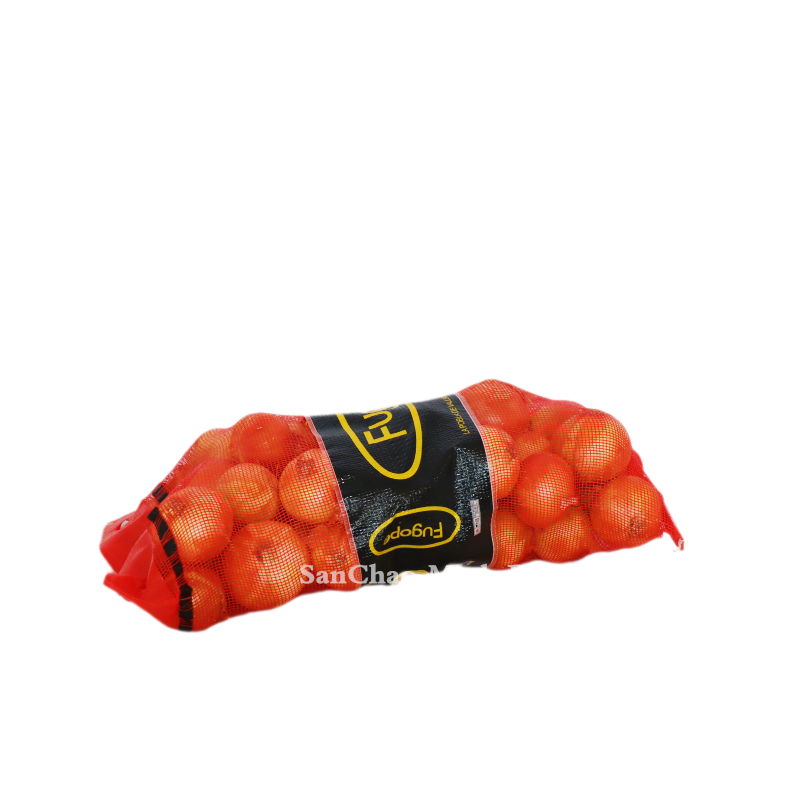
Merchandising Value: Visual presentation heavily influences supermarket buyers. Marketing psychologists understand the immense power of color-coding. Packers traditionally use bright red mesh for yellow onions. Deep purple or earth-brown meshes beautifully complement russet potatoes. The mesh visibility itself acts as a powerful trust signal for shoppers. Consumers want to physically see the freshness of the crop. They quickly reject opaque packaging that hides potential bruising or sprouts. Many national brands rely on customized Wicketed Leno Mesh Bags to optimize both retail appeal and structural safety.
Food Safety and Compliance: Modern agriculture strictly regulates all material handling. You must proactively evaluate food-grade material certifications. The manufacturing process must absolutely prevent chemical contamination. Ensure your supplier uses 100% virgin polymer resins. Recycled plastics often carry unknown impurities or heavy metals unsuited for food contact. Strict compliance protects your brand reputation from catastrophic product recalls.
Your packaging supplier functions as a direct extension of your packing facility. Careful vendor vetting prevents disastrous automated production failures.
Choosing a vendor based solely on the lowest quote carries immense financial risk. Cheap packaging often results in frequent automated line failures. You lose any upfront unit savings during a single hour of machine downtime. Seek out manufacturing partners enforcing rigorous quality control protocols. Look for documented tensile strength testing. Demand strict dimensional tolerance checks for every batch. Consistency matters far more than marginal unit discounts. Partnering with an expert Wicketed Leno Mesh Bags manufacturer ensures reliable, stress-free daily production.
Agriculture relies entirely on rigid, unpredictable seasonal windows. You must assess the manufacturer's ability to scale output rapidly. Can they meet your massive volume demands during peak harvest seasons? Evaluate their Minimum Order Quantities (MOQs) closely. Compare these requirements against your own warehouse storage capabilities. You do not want vital operating capital tied up in unused packaging inventory sitting idle.
Supply chain traceability is no longer an optional luxury. Federal regulators and major retailers demand strict tracking protocols. Ensure your vendor offers custom printed bands and high-resolution labels. These prominent bands build critical retail brand recognition. More importantly, they hold essential traceability data. You need clear, scannable spaces for barcodes, farm origin details, and lot numbers. Robust customization ensures full regulatory compliance across regional and international borders.
Successful automatic bagging requires complete operational synergy. You must seamlessly blend high-precision packaging mechanics with exact machine calibration. You simply cannot achieve peak packhouse efficiency using subpar, inconsistent materials. Prioritizing dimensional accuracy and material strength eliminates frustrating line stoppages.
Take immediate action to optimize your automated packing line. We strongly advise supply chain managers to request detailed specification sheets before switching vendors. Always demand physical sample runs. You must test the wicket alignment and tear-strength on your specific machinery before committing to bulk seasonal orders. Evaluate the mesh strength under real-world simulated transit conditions.
Do not let poor packaging dictate your daily packing speed or cause produce spoilage. Contact our technical team today. We provide comprehensive packaging audits tailored specifically to your facility's equipment. Request a customized quote and start maximizing your operational throughput immediately.
A: Standard Leno bags arrive loose and require manual opening by a worker. Wicketed bags feature a pre-aligned top header. This header contains prepunched holes stacked neatly on a wire wicket. Engineers design this specific collation exclusively for high-speed mechanical feeding and automatic bagging equipment.
A: Yes, most are fully recyclable. However, successful recycling depends on the material composition. Pure PP or PE bags easily enter standard agricultural plastic recycling streams. Mixed-material labels or added paper bands complicate the process. Always check your local infrastructure guidelines for processing woven polymers.
A: You should first consult your equipment's Original Equipment Manufacturer (OEM) manual. The manual will list precise pin diameters and distance requirements. Always confirm these exact dimensional tolerances with your packaging manufacturer before mass production begins.
A: Absolutely. While ideal for root vegetables, packers successfully use them for citrus, firewood, and certain nuts. You must carefully consider the specific weight and moisture-release needs of the new product. Heavy firewood requires a thicker denier yarn than lightweight citrus.


