
English 

Views: 0 Author: Site Editor Publish Time: 2026-06-22 Origin: Site


Agricultural packaging presents a delicate balancing act for modern operators. Packers must juggle bulk durability, produce respiration needs, and strict cost controls simultaneously. Potatoes demand highly robust containment strategies from farm to shelf. They easily fall victim to light-induced greening and moisture rot during extensive transit windows. Polyethylene Packaging stands out as the prevailing industry standard for high-volume potato distribution. It delivers exceptional tensile strength alongside precise ventilation capabilities. Modern poly films also integrate flawlessly into high-speed automated packing lines.
This guide offers procurement managers and agricultural packers a highly pragmatic framework. You will learn how to evaluate various film structures and assess critical machinery compatibility. We also share actionable advice for shortlisting a reliable Polyethylene Packaging manufacturer. Following these principles will help you protect your harvest, optimize operations, and secure your bottom line effectively.
Polyethylene (PE) offers a superior strength-to-weight ratio compared to traditional paper or mesh, significantly reducing freight costs and transit damage.
Optimal potato packaging requires engineered micro-perforations or macro-punch holes to regulate moisture and oxygen, extending shelf life.
Selecting the right PE blend (e.g., LDPE for flexibility, LLDPE for puncture resistance) dictates automated packing line efficiency.
Evaluating a manufacturer requires auditing their food safety certifications (SQF, BRCGS) and their capacity for sustainable, recycle-ready mono-material extrusion.
Packers constantly evaluate packaging materials to maximize margins. Polyethylene consistently outperforms older alternatives across several vital metrics. High-volume production lines heavily favor poly films for their continuous throughput capabilities. Paper materials face rising raw material costs globally. They also tear easily under rapid mechanical tension. Woven mesh bags slow down processing significantly. Mesh requires specialized handling and limits modern automation speeds. Poly films feed continuously through high-speed bagging systems. This efficiency dramatically lowers your cost-per-unit.
Durability dictates profitability in the produce sector. Palletization stacks immense weight onto individual bags. Bottom-tier bags bear crushing pressure during cross-country freight transit. Catastrophic bag failure ruins entire pallets. Polyethylene stretches slightly under pressure instead of snapping or bursting. This puncture resistance prevents product loss during aggressive retail handling. You minimize expensive shrink metrics.
Potatoes are living organisms requiring precise environmental control. Excessive light exposure triggers solanine production. Solanine causes toxic, unsellable greening on the potato skin. Mesh bags offer zero light protection. Paper bags absorb ambient moisture and degrade structurally over time. Opaque or tinted UV-resistant PE films solve both issues perfectly. They block harmful light while retaining absolute structural integrity in damp coolers.
Material Type | Production Scalability | Puncture Resistance | Moisture Control | Light Blocking |
|---|---|---|---|---|
Polyethylene (PE) | Extremely High | Excellent | Controlled via venting | High (Tinted/Opaque) |
Paper | Moderate | Low to Moderate | Poor (Degrades) | High |
Woven Mesh | Low | High | None (Fully open) | None (Zero block) |
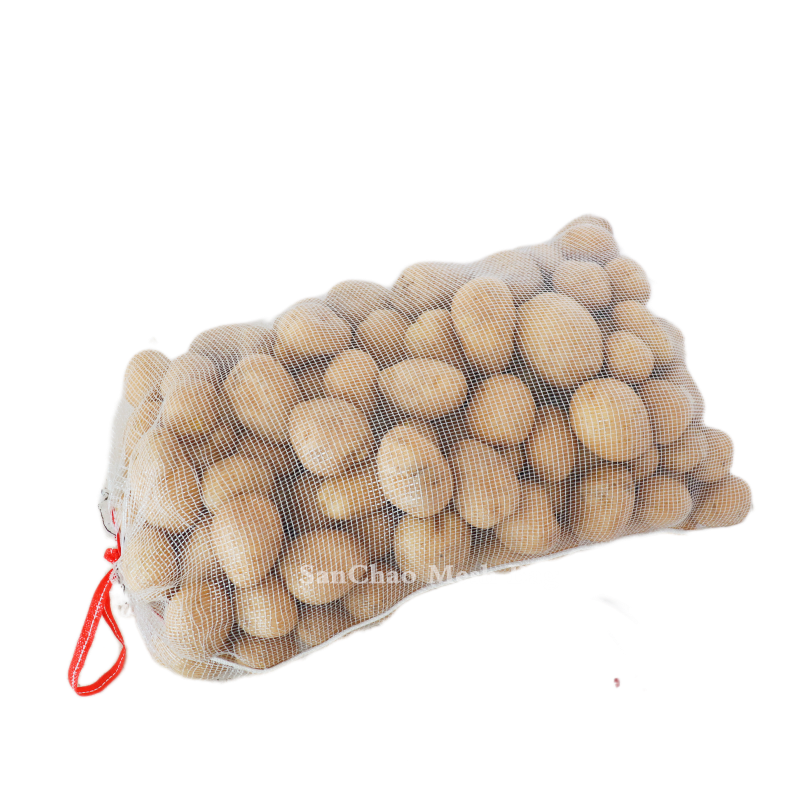
Performance relies entirely on material science and precise engineering. You cannot use generic plastic for agricultural applications. Low-Density Polyethylene (LDPE) provides essential printability and high optical clarity. Consumers generally prefer seeing the produce inside the bag. Marketers demand bright, unblemished graphic reproduction for retail shelves. Linear Low-Density Polyethylene (LLDPE) introduces a stronger molecular structure. LLDPE delivers superior tear resistance. It stops sharp potato edges from puncturing the sidewalls. Engineers blend LDPE and LLDPE together. You get vibrant branding alongside industrial strength.
Engineered ventilation separates premium bags from cheap alternatives. Potatoes breathe continuously after harvest. They release moisture into the sealed environment. Trapped moisture accelerates anaerobic rot rapidly. Custom perforation patterns represent a mandatory technical requirement. Packers utilize two primary ventilation strategies to protect shelf life:
Macro-punch holes: Large, widely spaced holes allow rapid cooling. Hot potatoes require immediate temperature drops inside warehouse coolers.
Micro-perforations: Tiny, laser-drilled holes control daily respiration. They balance oxygen intake and carbon dioxide output perfectly.
Structural integrity remains intact despite these targeted holes. Furthermore, light-blocking additives delay sprouting and greening. Clear bags sell well but risk product degradation. Formulators integrate specific UV inhibitors into the resin mix. Multi-layer co-extrusion allows for black or amber inner layers. These dark layers block harmful ultraviolet rays. Simultaneously, white or clear outer layers accept vibrant flexographic ink beautifully.
Machinery integration determines your daily throughput capacity. Polyethylene Packaging must glide smoothly through complex mechanical systems. The Coefficient of Friction (COF) measures surface slip accurately. COF serves as a critical metric for Vertical Form Fill Seal (VFFS) machines. High COF means the film sticks to metal forming collars. The machine jams immediately. Low COF means the film slides too quickly. Registration sensors fail to read print marks. Incorrect COF leads to costly downtime and wasted materials.
Sealability dictates how quickly your lines can operate. Heat sealing mechanisms melt the plastic to close the bag. Dwell time refers to the exact contact duration. A wide sealing window provides operational forgiveness. The PE film must achieve a hermetic seal rapidly. Operators cannot afford burn-throughs or weak seals. High-quality blends melt evenly under various temperature profiles. They maintain high throughput rates without constant recalibration.
Packers must choose the correct format for their facility layout. You should follow a strict shortlisting logic:
Rollstock Film: Ideal for high-volume, fully automated facilities. VFFS machines form, fill, and seal bags continuously from a single large roll. It offers the fastest processing speeds.
Pre-made Wicketed Bags: Suited for semi-automated or lower-volume operations. Workers or basic machines load produce into pre-formed bags stacked on metal pins (wickets). It requires lower initial capital investment.
Corporate sustainability mandates reshape procurement strategies yearly. Retailers demand eco-friendly solutions from their agricultural suppliers. The industry currently champions recycle-ready mono-materials. Multi-layer laminates combine plastics, foils, and papers. They are notoriously complex and expensive to recycle. The market shifted heavily toward 100% PE structures. These mono-material bags qualify for Store Drop-Off recycling programs. Consumers easily recycle them as #4 plastics. This approach meets sustainability goals without sacrificing performance.
Post-Consumer Recycled (PCR) content presents unique operational challenges. Integrating PCR into potato bags sounds environmentally progressive. However, FDA food-contact compliance creates severe regulatory hurdles. PCR resins often introduce microscopic impurities. These impurities can degrade film clarity. They also weaken overall tensile strength. You must balance green marketing goals against potential bag failures. Many packers restrict PCR to secondary packaging layers to avoid direct food contact.
Bio-based plastics offer a fascinating glimpse into future packaging. Chemical engineers derive bio-PE from sugarcane or extracted potato starch. It functions exactly like traditional fossil-based polyethylene. It offers identical puncture resistance and printability. Bio-PE drastically reduces corporate carbon footprints. Unfortunately, current cost-prohibitive realities limit widespread adoption. Supply chains lack the global scale needed to drive down raw material prices. It remains a premium, forward-looking alternative for niche organic brands.
Choosing the right supplier mitigates massive operational risks. You must audit potential partners rigorously. Food safety certifications remain absolutely non-negotiable. Request proof of GFSI-recognized certifications immediately. Standard frameworks include SQF and BRCGS. These certifications guarantee clean, highly regulated manufacturing floors. Your packaging must originate from an FDA-compliant environment. Contaminated packaging introduces severe liability and recall risks for agricultural packers.
Assess their custom extrusion and printing capabilities deeply. Single-layer films lack performance nuances. A premium supplier co-extrudes multi-layer films routinely. They manipulate internal and external layers for optimal functionality. High-definition flexographic printing capabilities are equally critical. Retail shelves are visually competitive environments. Your supplier must provide sharp, vibrant branding. Ask for previous production samples to verify print registration accuracy and ink adherence.
Supply chain resilience dictates long-term success. Agricultural seasonality is notoriously unforgiving. Harvest peaks demand enormous packaging volumes instantly. Supply chain delays ruin perishable crops. A reliable partner demonstrates robust raw material redundancy. They hold strategic resin reserves year-round. They prove scalable capacity during your busiest harvest weeks. Furthermore, demand transparent Minimum Order Quantities (MOQs). Clear MOQ policies prevent cash flow bottlenecks and warehouse crowding.
Successful potato distribution hinges entirely on strategic material selection. You must balance engineered ventilation against sheer puncture resistance. Modern automation demands precise machinery compatibility to maximize throughput. Poly films easily outpace traditional mesh and paper in all categories. They protect your produce while lowering overall freight weights.
Procurement teams should adopt a proactive testing methodology. Contact potential suppliers and request physical film samples. Ask for detailed COF data sheets and GFSI certification documents upfront. Never commit to large production volumes blindly. Run a controlled pilot test on your existing packing lines. Monitor machine speeds, seal integrity, and produce shelf life closely. This deliberate approach guarantees a highly profitable packaging transition.
A: Thickness typically ranges from 1.5 to 3.0 mil. It depends heavily on the produce weight and required puncture resistance. A 5 lb consumer bag operates well at 1.5 mil. Conversely, a 50 lb bulk service bag demands 3.0 mil to survive heavy palletization and rough transport without bursting.
A: Yes, most LDPE and LLDPE mono-material bags are highly recyclable. They fall under the #4 plastic category. Consumers can recycle them via standard Store Drop-Off programs. The bags must be completely clean and dry before recycling to prevent facility contamination.
A: Manufacturers utilize specialized perforation technologies during the converting process. They use hot needle, cold needle, or laser systems to punch precise holes. They customize hole sizes and placement densities based exactly on the specific potato variety's unique respiration rate.
A: Standard lead times generally span 4 to 8 weeks. However, this varies based on manufacturer capacity and agricultural seasonality. Initial orders requiring new custom printing plates often take longer. Reorders typically process much faster once artwork is established.


