
English 

Views: 0 Author: Site Editor Publish Time: 2026-06-19 Origin: Site


Material failure in large-scale environmental and agricultural projects carries devastating consequences. Burst bags quickly trigger severe soil erosion. Rapid UV degradation scatters microplastics into fragile ecosystems and ruins valuable crops. These physical risks make proper material selection critical. Evaluating these industrial materials requires looking far beyond basic utility. You must rigorously assess polymer blends, UV-inhibitor ratios, and structural engineering. The chosen specifications must perfectly match specific geographic and climatic realities. Off-the-shelf retail solutions simply cannot survive multi-year exposure in punishing environments.
This article gives procurement teams, environmental engineers, and agricultural directors a highly practical roadmap. We provide a rigorous, evidence-based framework for specifying, evaluating, and sourcing these vital supplies. You will discover exactly how precise material science prevents catastrophic environmental failures. By mastering these evaluation dimensions, you ensure lasting project stability and eliminate unpredictable material breakdowns in the field.
Standard, off-the-shelf sandbags lack the targeted UV resistance and dimensional specificity required for multi-year desert and agricultural exposure.
Material selection (HDPE vs. Polypropylene) directly impacts structural integrity under prolonged thermal and physical stress.
Customization variables—such as tube-shaped dimensions for desert greening or specialized weaves for agricultural drainage—reduce labor costs and improve project success rates.
Partnering with an audited **Customized Woven Bags manufacturer** mitigates supply chain risks and ensures compliance with environmental and load-bearing standards.
Standard retail-grade sandbags fail predictably in commercial or infrastructural applications. Manufacturers design them for short-term emergency use. They lack the engineering required for permanent installations. When you deploy them in harsh environments, structural breakdown happens rapidly. We must understand exactly why these failures occur to avoid them.
Ultraviolet (UV) photodegradation destroys untreated polymers. Sunlight attacks the molecular chains within the plastic. The material absorbs UV energy, causing those chains to break apart. The plastic loses its flexibility and becomes highly brittle. Soon, the fabric ruptures under minimal pressure. This degradation releases hazardous microplastics into the surrounding soil. The environmental damage complicates regulatory compliance and damages local ecology.
Operational inefficiencies multiply when off-the-shelf bags fail. Refilling and replacing broken bags requires massive labor. Remote locations like deep deserts or expansive agricultural tracts amplify these logistical burdens. Workers must travel long distances to reach the compromised sites. They must bring heavy equipment to remove spilled material. Utilizing engineered Customized Woven Bags prevents this repetitive maintenance cycle.
We define successful deployments through strict criteria. You need a predictable material lifecycle. The bags must demonstrate a zero-burst tolerance during mechanized filling operations. They must also offer a precise fit for the specific application environment. Meeting these criteria guarantees infrastructure safety and reduces operational friction.
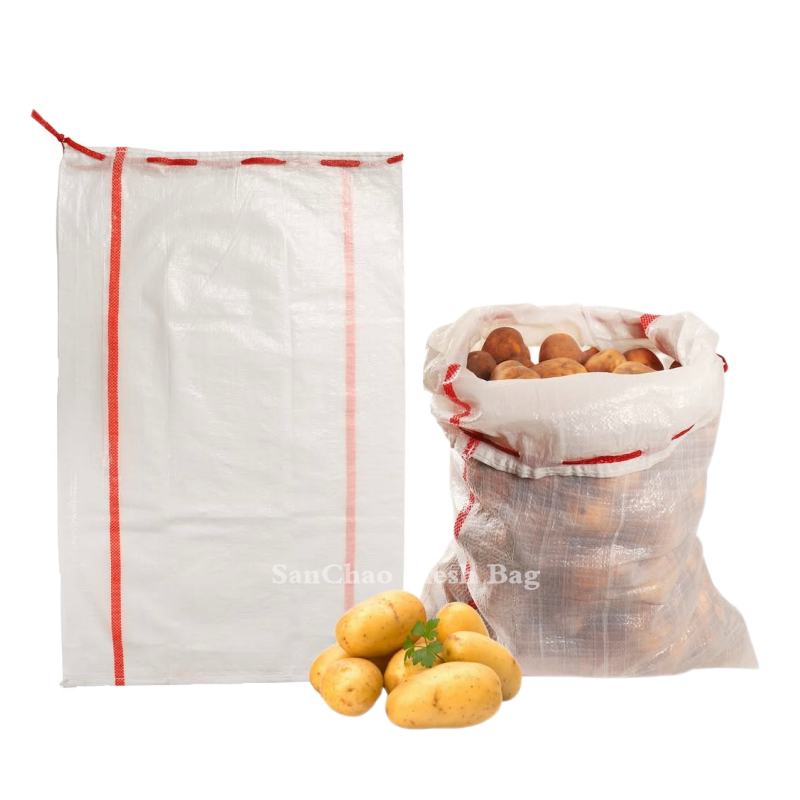
Flood control and soil stabilization projects demand high dynamic load bearing capabilities. Water exerts immense hydrostatic pressure against protective barriers. Debris strikes the bags during active flooding. You must evaluate puncture resistance carefully. Standard weaves stretch and tear when struck by submerged branches or rocks. Tightly engineered meshes absorb these impacts without tearing.
Friction coefficients dictate retaining wall stability. Smooth plastic surfaces slide against one another under heavy loads. Embankments collapse when this slippage occurs. Specific weave patterns create rough, interlocking textures. These textured surfaces grip adjacent bags tightly. This mechanical locking prevents slippage and maintains structural geometry during heavy rain events.
Desert greening relies heavily on the tube-shaped sandbag model. Teams use these long, tubular bags to stabilize shifting dunes. They form continuous barriers across the sand. Wind cannot easily dislodge these elongated structures. They effectively create sheltered micro-environments. Plant roots grow safely behind these protective lines. Standard square bags cannot replicate this continuous windbreak effect.
Thermal resilience determines success in arid regions. Deserts experience extreme diurnal temperature fluctuations. Blistering daytime heat softens standard plastics. Freezing nighttime temperatures cause sudden contraction. This constant expansion and contraction destroys tensile strength. You must specify polymer blends engineered to handle these thermal extremes. These formulations retain structural integrity despite severe environmental stress.
Agricultural applications demand precise moisture and aeration control. We differentiate strictly between coated and uncoated fabrics. Coated bags offer waterproof barriers. They excel at silage sealing and irrigation routing. They trap moisture inside or keep rain out. Uncoated bags remain breathable. They wick moisture away from stored crops. They prevent mold growth during grain transport. Selecting the wrong coating destroys the agricultural product inside.
Chemical resistance presents another critical factor. Fertilizers and pesticides degrade weak plastics rapidly. Alkaline soils eat away at standard polypropylene. You must match the chemical composition of your Customized Woven Bags to the local soil chemistry. This prevents premature rotting when bags sit on treated agricultural land for extended periods.
Choosing the correct base polymer determines field performance. Industry professionals usually choose between Polypropylene (PP) and High-Density Polyethylene (HDPE). Each material offers distinct engineering advantages. We must compare them directly to understand their optimal use cases.
Performance Metric | Polypropylene (PP) | High-Density Polyethylene (HDPE) |
|---|---|---|
Tensile Strength | Excellent under heavy static loads. Highly rigid. | Good, but stretches slightly under extreme pressure. |
Flexibility & Tear Resistance | Lower flexibility. Prone to snapping if over-stressed. | Superior flexibility. Resists tearing from sharp debris. |
Extreme Weather Performance | Becomes brittle in freezing temperatures. | Maintains elasticity in extreme cold and heat. |
Ideal Application | Flood walls, stable agricultural storage, grain transport. | Desert dune stabilization, rocky terrain, freezing climates. |
UV inhibitor additives dictate actual field lifespan. You should ignore vague "weatherproof" marketing claims. Ask vendors for verifiable degradation curves. Standard testing metrics measure hours of continuous UV exposure. A credible benchmark tracks how many hours pass before the material loses 50% of its original tensile strength. High-quality inhibitors slow the photodegradation process significantly. They absorb UV rays and protect the underlying polymer chains.
Denier and weave density control puncture resistance. Denier measures the thickness and weight of the individual plastic yarns. A higher denier indicates thicker yarn. Weave density measures how tightly machines weave those yarns together. High-denier yarns packed tightly withstand heavy machinery handling. Skid steers and hopper loaders frequently scrape the bags during filling. High mesh density stops those scrapes from becoming catastrophic tears.
Common Mistake: Overlooking denier requirements. Using low-denier bags for mechanized filling often results in a 15% burst rate on the staging ground. Always specify heavy denier for automated operations.
Translating project needs into exact manufacturing specifications guarantees success. You cannot leave these details open to interpretation. Every physical feature dictates a specific operational outcome. We break down the customization process into actionable engineering steps.
Dimensional Engineering: Custom sizing directly dictates deployment speed. Standard 14x23 inch dimensions work well for manual filling. However, custom long-tubes fit automated sandbaggers better. Exact dimensions ensure compatibility with your specific hopper equipment. Improper sizing causes material spills and slows down the filling line.
Closure Mechanisms & Hemming: The top closure determines sealing strength. Heat-cut tops cost less but fray easily. Hemmed tops fold the fabric over and sew it, eliminating fraying. Tie-strings offer quick manual closing. Industrial sewing provides permanent, sift-proof seals. Choose industrial sewing when transporting fine powders or fine silt.
Coating and Lamination: Assess moisture barrier requirements accurately. Applying a poly-lamination layer creates a waterproof shield. This works perfectly for flood defense. However, lamination risks trapping unwanted condensation if used for seed storage. Breathable fabrics keep organic materials safe from rot.
Implementation Risk Management: Address logistical realities before manufacturing begins. Transporting and storing empty customized stock requires planning. If workers leave empty bags exposed to sunlight for months before filling, UV degradation begins early. Specify UV-blocking shipping wraps to prevent pre-deployment degradation.
Performance Metrics Specification Chart | ||
Specification Feature | Primary Outcome | Field Test Standard |
|---|---|---|
Custom Dimensions | Equipment compatibility, faster fill times | Hopper fit test, automated fill cycle timing |
Hemmed Top Closure | Elimination of fabric fraying | Manual pull-test, drop testing from 4 feet |
High-Denier Weave | Puncture resistance against machinery | Drag test on concrete, skid-steer loading test |
Anti-Slip Texturing | Structural stability in retaining walls | Incline friction test, stack stability test |
Sourcing these engineered materials requires careful vendor assessment. A brilliant design fails if the factory cannot produce it reliably. You must evaluate potential partners on stringent operational criteria. Finding a reliable Customized Woven Bags manufacturer mitigates immense project risks.
Production capacity must align with your project timelines. High-volume infrastructural projects require phased deliveries. Ask how vendors manage peak load requests. A manufacturer running at 100% capacity has no room for unexpected delays. Evaluate their lead times during seasonal demand spikes. Ensure they can scale production rapidly if your project scope expands.
Quality assurance protocols separate premium manufacturers from commodity brokers. Look for factories providing transparent laboratory data. They should offer documented drop testing results. They must provide certified UV-exposure testing reports. Load-bearing limits should come from accredited third-party labs. Never accept internal estimates without verifiable documentation.
Assess their customization flexibility early in the procurement cycle. A capable manufacturer willingly produces pilot batches. They offer prototypes for field testing. You should test these prototypes on-site before committing to a high-volume Minimum Order Quantity (MOQ). This trial phase exposes design flaws before mass production begins.
Shortlisting Logic Checklist:
ISO Certifications: Verify current quality management credentials.
Demonstrable Track Record: Ask for case studies in B2B infrastructural supply.
Transparent Raw Material Sourcing: Confirm they use virgin resins for critical applications rather than unpredictable recycled blends.
Lab Testing Availability: Ensure they maintain in-house testing equipment for batch consistency.
Best Practice: Always request a facility audit report. Understanding their loom technology and extrusion processes provides confidence in their dimensional consistency.
Specifying customized woven bags is a strict engineering decision. It requires far more attention than a standard procurement line item. Material failures in extreme environments carry devastating consequences. Selecting the correct polymer blends, UV inhibitors, and custom dimensions guarantees long-term stability. You protect fragile ecosystems and safeguard expensive agricultural outputs by making data-driven material choices.
Buyers should consolidate their environmental data immediately. Document your local UV index, fill-material weight, and planned deployment methods. Gather this information before initiating any Requests for Quotations (RFQs). Clear data ensures factories build exactly what you need. Vague requests result in subpar products.
Take action by evaluating your current project risks today. Request detailed technical data sheets from your shortlisted vendors. Consult directly with an engineering team to draft exacting custom specifications. Proper preparation now prevents costly structural collapses in the future.
A: Verifiable lifespans range from 6 to 24 months. This depends heavily on the UV inhibitor percentage mixed into the polymer. Factories can test and plot degradation curves up to a specific hour count. Claims of infinite lifespans are scientifically inaccurate. The material eventually breaks down under intense solar radiation.
A: Yes, custom dimensions usually require higher MOQs. Factories must adjust their circular looms to accommodate unique widths. This setup process generates fabric waste. Manufacturers offset this setup cost and material loss by requiring larger baseline orders for non-standard sizes.
A: Tube-shaped bags form a continuous, unbroken barrier against wind. They stabilize shifting dunes highly effectively. This unbroken geometry retains moisture on the leeward side longer. Plants take root safely in these stable micro-environments. Square bags leave gaps that allow wind and sand to break through easily.
A: You can, but you face strict trade-offs. Using recycled resins lowers overall tensile strength and reduces UV resistance predictability. For critical infrastructure or heavy load-bearing applications, engineers strongly recommend virgin polymers. Recycled materials suit temporary, low-stress applications where minor failures do not pose severe risks.


