
| Availability: | |
|---|---|
| Quantity: | |
The 6003 Potato PP Woven Bag is a heavy-duty packaging solution designed specifically for potato storage and transport, featuring transparent PP woven technology that combines visibility, strength, and durability. As a premium vegetable woven bag, it addresses the core needs of potato packaging—high load-bearing capacity to handle heavy tubers, breathability to prevent sprouting, and transparency to facilitate quality checks. Ideal for large-scale potato farms, distributors, and food processing plants, this recyclable potato bag offers cost-effective, reliable protection for bulk potatoes, reducing damage and waste during logistics.
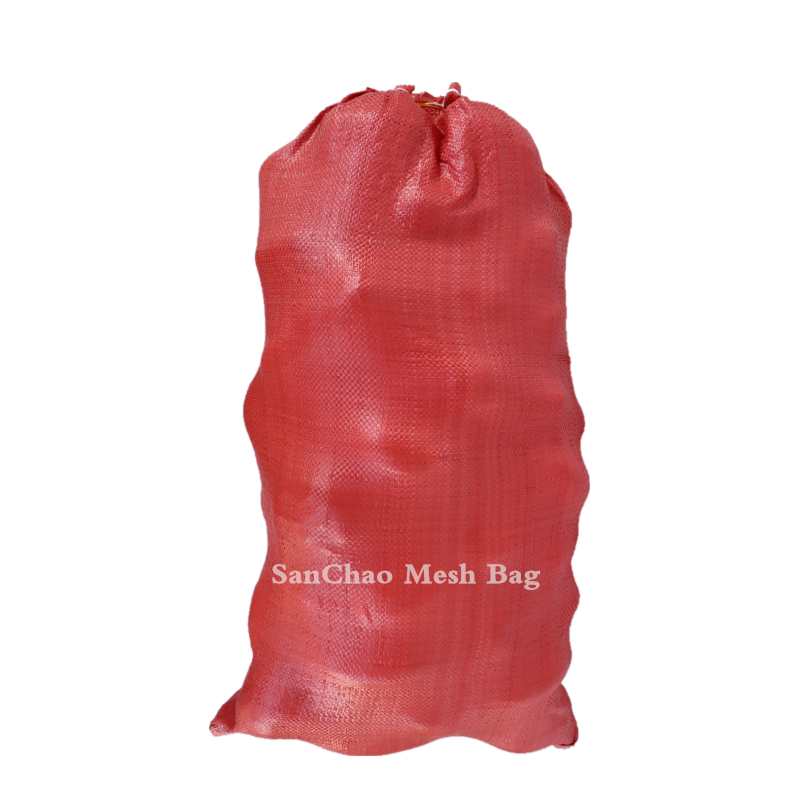
Parameter | Details |
Product Model | 6003 Potato PP Woven Bag |
Color | Transparent |
Specification (Width×Length) | Customizable (Standard: 46×83cm) |
Warp Density | 40 threads/cm |
Weft Density | 39 threads/cm |
| Material | Polypropylene (PP) + 10% Enhancer |
Compliance Standard | GB/T 8946, ISO 9001, GB 4806 |
Employing double-layer circular knitting technology, the bag features a 40×39 warp-weft density with reinforced stitching at the bottom and edges. This design distributes weight evenly, preventing tearing even when fully loaded with potatoes. The transparent material is thickened (0.03mm) to resist punctures from potato eyes or rough surfaces, while the woven structure maintains breathability to prevent moisture buildup and sprouting.
For industrial potato farms, the bag’s high load capacity and durable design make it ideal for post-harvest packaging. The transparent surface allows quick sorting of potatoes by size and quality, streamlining harvest operations.
In logistics and wholesale, the bag’s stackable design and heavy-duty structure optimize transportation efficiency. It can be safely stacked in containers or trucks without collapsing, reducing space usage and transportation costs. The breathable weave ensures potatoes remain fresh during long-distance shipping.
Food processing plants and cold storage facilities use this bag to store bulk potatoes, as the food-grade material complies with processing standards. The transparent design allows easy inventory management, while the moisture-proof and UV-resistant properties protect potatoes during long-term storage.
We offer comprehensive customization for industrial and commercial potato packaging:
Size & Dimension: Customize width and length to fit standard pallets or storage racks, with seamless tubular weaving for large-size bags.
Surface Treatment: Add OPP coating for enhanced moisture resistance, UV protection layers for outdoor storage, or lamination for printing high-resolution graphics.
Branding & Traceability: Print company logos, batch numbers, or QR codes for logistics traceability, using non-toxic, wear-resistant inks.
Functional Add-Ons: Incorporate heat-sealed openings, drawstrings, or RFID tags for smart inventory management, suitable for large-scale distribution.
Yes. The breathable woven structure maintains optimal air circulation, reducing ethylene gas buildup that causes sprouting. For long-term storage, we recommend combining the bag with a moisture-absorbing sachet (available as an add-on) for enhanced preservation.
Absolutely. The PP material is moisture-proof, and the woven design prevents condensation buildup. The bag’s structure repels water, protecting potatoes from rot or mold in humid warehouses or outdoor storage.
When stored in a dry, cool environment, the bag has a shelf life of 3–5 years. The UV-stabilized material prevents brittleness or degradation, ensuring it remains usable for multiple harvest seasons.
PP woven bags (polypropylene woven bags) are multi-functional packaging containers made from polypropylene (PP) plastic flat yarns through weaving technology. With their high strength, light weight, corrosion resistance and environmental friendliness, they have become core packaging materials in agriculture, industry, construction and other fields. The following is a systematic introduction from core characteristics, technical parameters, application scenarios and purchasing points:
I. Core Features and Advantages
1. High Strength and Durability
Tensile strength ≥ 30kN/m (in accordance with national standard GB/T 8946), load-bearing capacity ranging from 20 to 2000kg, superior puncture and tear resistance compared to paper bags.
Strong weather resistance: outdoor service life ≥ 2 years after adding UV stabilizers, freeze-resistant and corrosion-resistant, suitable for harsh environments.
2. Lightweight and Cost Advantage
Gram weight range 45–160g/㎡, 30% lighter than traditional packaging, unit price only 0.5–3 yuan per piece (50kg capacity), cost is only 1/3 of that of jute bags.
3. Functional Diversity
Breathable and waterproof: mesh density adjustable (5×5 to 14×14 mesh), balancing ventilation and moisture-proofing (e.g., onion bags with 8×8mm mesh reduce rot rate by 30%).
Environmentally friendly and recyclable: 100% recyclable, some products use recycled PP material (30–50% content) or PLA blends, with a degradation rate of ≥90% within 180 days.
II. Technical Parameters and Specifications
Key Parameters Table
| Parameter | Range | Example Application |
| Grammage | 45–200g/㎡ | 00g/㎡ can bear 50kg (feed bag) |
| Size | Width: 25–600cm, Length: customizable | Standard fertilizer bag: 45×80cm |
| Denier | 600D–2200D (flat filament fineness) | 1500D for heavy-duty sand and gravel bags |
| Surface Treatment | OPP coating / pearlescent lamination / UV protection | Coating enhances moisture resistance (fertilizer bags) |
Process details
Weaving method: Circular knitting machine (seamless tubular)
Post-treatment: The bag opening can be heat-sealed, threaded or sewn at the bottom; printing supports 9-color customization (screen printing / heat transfer printing).
III. Application Scenarios and Solutions
1. Agricultural Sector (60%)
Grain Packaging: 25/50kg moisture-proof laminated bags, meeting food-grade GB 4806 standards.
Fruit and Vegetable Transportation and Storage: Woven mesh bags (e.g., 8×8mm mesh) for breathability and freshness preservation, reducing compression damage.
2. Industrial and Construction (30%)
Chemical Raw Materials: Acid and alkali-resistant PP bags for loading fertilizers and resins, with anti-leakage powder design.
Geotextiles: 2.5m wide anti-seepage fabric, tensile strength ≥ 35kN/m (for water conservancy projects).
3. Retail and Innovative Applications
Environmentally Friendly Shopping Bags: Layered PP + zipper design, foldable and storable, reusable hundreds of times.
Smart Bulk Bags: Embedded RFID tags for logistics traceability (in the chemical and grain industries).
---
IV. Purchasing and Customization Guide
1. Selecting by Scenario
Heavy-duty packaging (mineral sand/construction materials): Choose round-woven fabric + 100g/㎡ weight + reinforced base fabric.
Ventilation requirements (fruits/vegetables/aquatic products): Choose warp knitted mesh bags + HDPE material (e.g., 8×8mm mesh).
Moisture-proof and sealed (food/fertilizer): Choose flat-woven bags + PE inner liner film (0.02–0.04mm thickness).
2. Customization Options
Parameter customization: Mesh density, weight, size (supports 25–150cm width and any length).
Printing and processing: Colorful LOGO printing (≤9 colors), UV protective layer, zipper/handle reinforcement.
3. Quality Inspection
Identification and certification: Check QS mark, execution standards (e.g., GB/T 8946).
Strength test: High-quality bags have flat yarns that are not easily torn longitudinally, and the film does not delaminate after boiling in water for 30 minutes.
V. Environmental Protection Trends and Innovation Directions
Recycled Materials: Recycled PP accounts for 30–50%, with a 20% cost reduction (conforming to GB/T 39199 standard).
Lightweighting Technology: Ultra-fine denier flat yarn (500 denier) achieves a 70g/㎡ high-strength alternative to the traditional 80g/㎡.
Smart Production: Internet of Things (IoT) monitors tension and speed, reducing defective product rate to 0.5%.
Summary
PP woven bags have become the cornerstone of the packaging industry due to their high strength, light weight, and multi-functionality. Their core values lie in:
Scene adaptation: From moisture-proofing grains to allowing fruits and vegetables to breathe, the structure can be flexibly customized;
Environmental upgrade: Degradable materials and recycled materials promote green transformation;
Intelligent efficiency improvement: RFID traceability and automated production reduce costs and increase efficiency.
When purchasing, it is necessary to comprehensively consider the load-bearing requirements, environmental adaptability, and certification standards (such as ISO 9001), and give priority to suppliers that provide process support.
Raschel vs Leno mesh bags: Compare strength, stretch, and compatibility to protect produce and improve logistics.
Stop produce spoilage and bag ruptures with breathable Raschel mesh bags. Durable warp-knitted structure for bulk logistics. Get expert spec selection guide.
Stop losing potatoes and onions to rot, sprouting, and mold. Learn how to select the best mesh bags for proper ventilation and extended shelf life.
Reduce produce spoilage. Breathable mesh packaging improves airflow, prevents moisture buildup, extends shelf life. Discover Raschel & Leno mesh bags.
Boost produce sales with handled mesh bags: grab-and-go convenience, superior ventilation, and automation-ready wicketed designs.
From the farm to the fork, the journey of root vegetables like onions, potatoes, and garlic is a race against time. The post-harvest phase presents a significant challenge: preserving freshness while navigating a complex supply chain.
In industries where precision is paramount, the tools you use make all the difference. From filtering automotive paint to packaging fresh produce, the smallest inconsistency can lead to significant quality issues or product loss.
In the fresh produce supply chain, proper packaging is a silent but critical partner. The journey from farm to fork is a race against time, where maintaining freshness is paramount.
In the fast-paced world of fresh produce, packaging is far more than a simple container. It's a critical tool that extends shelf life, enhances visual appeal, and protects valuable goods from farm to table. The right packaging choice can make the difference between profit and loss.
Jute vs PP mesh bags: Compare cost, breathability, spoilage, and sustainability to choose the best agricultural packaging for your supply chain.
Avoid mesh bag failures: compare single vs multi-strand weaving for filtration and packaging. Choose the right structure.
Learn how to choose onion mesh bags that prevent rot, reduce shrinkage, and boost brand visibility with custom printing for retail shelves.
Leno vs circular mesh bags: the right choice prevents produce rot & pallet collapse. See how to match the weave to your farm's needs.
Choose the right agricultural export packaging: mesh or bulk bags. Reduce spoilage, optimize freight, cut labor costs. Read our guide.
Optimize automated packing lines with Wicketed Leno Mesh Bags. Boost throughput, reduce labor costs, and prevent costly machine downtime.
Optimize potato packaging with polyethylene. Learn to choose the right PE films, integrate automated machinery, and find reliable manufacturers.
Guide to sourcing customized woven bags for extreme environments. Learn how polymer selection and UV specs prevent catastrophic field failures.
Learn how to choose the right vegetable mesh bags. Compare materials, weaves, and specs to prevent root crop spoilage and protect yields.
Compare solid woven PP vs. mesh bags for produce. Learn to balance strength and ventilation to maximize shelf life and prevent crop spoilage.
Why Are Onion Mesh Bags Usually Orange or Red?1. IntroductionWalk through the produce section of almost any supermarket in Europe, Canada, or North America, and you will quickly notice one thing: most onions are packed in orange or red mesh bags.This is not a coincidence.In the agricultural packagin